
Why Do Coleus Flower in Late Summer

“They’re three-man pots. I can’t move them alone,” I told my friend on the phone. “I’ve got help tomorrow, but I have a few hours to kill now.”
My buddy sighed and said, “OK, I’ll meet you for beer. But just one. It’s pizza night, and my wife expects me to do everything.” Actually, because he’s from south Georgia, he said, ‘pizza not’ and ‘my wyahf’ and ‘eva’thing’.
I’d picked up a load of expensive Italian clay pots in his small town. First thing in the morning, I'd deliver and plant them up for a client. So I booked a night in an old-school Howard Johnsons. Some creative soul had planted a whiskey barrel full of coleus to match the orange roof.

Two beers later, I said, “You’re gonna be late for pizza night. Are you fixin’ to leave?”
“I’m about to be fixin’ to leave,” he said.
I walked back to the motel, past the orange coleus. Its leaves were falling off, scraggly flowers thrust up. That old coleus was fixin' to leave too.
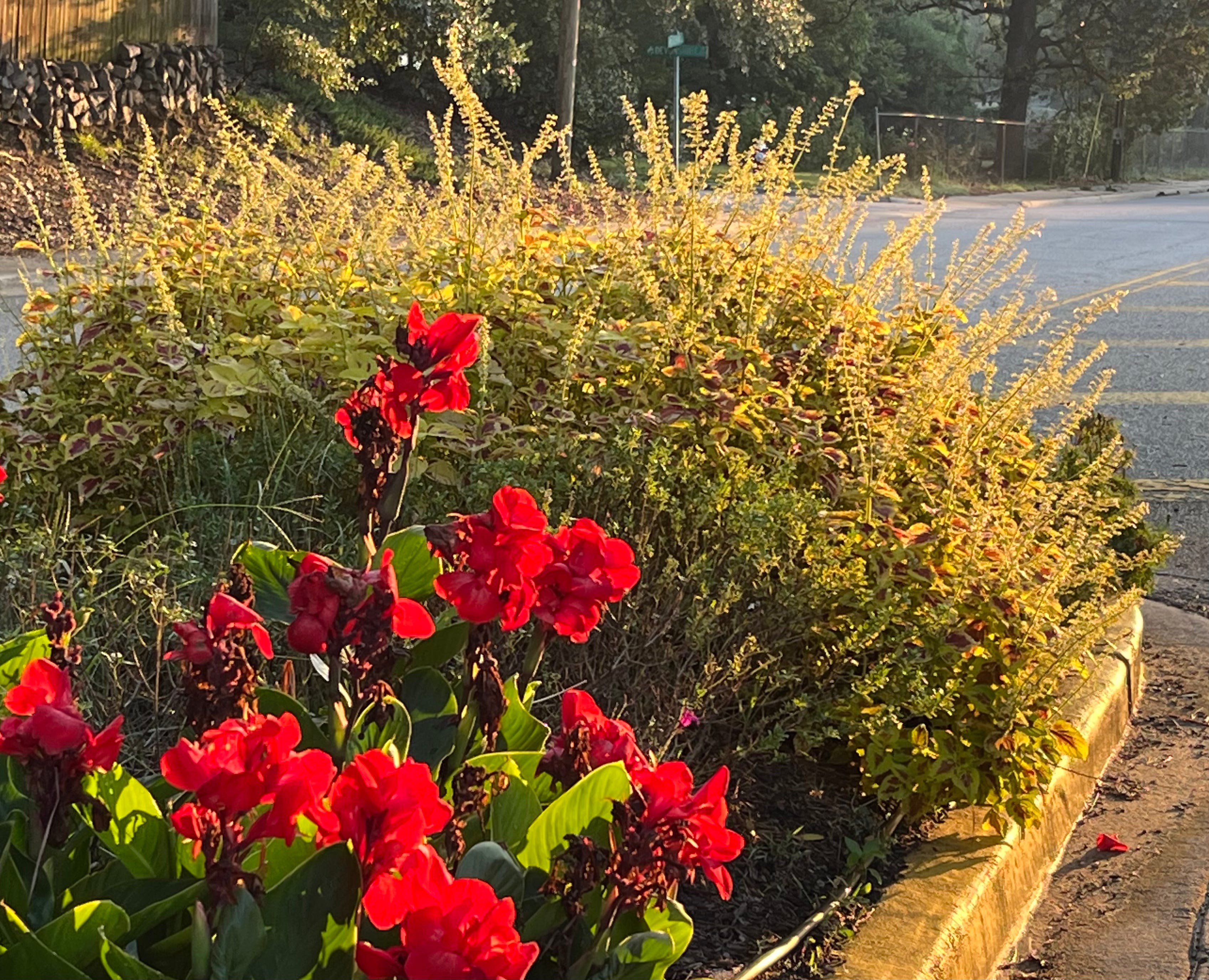
Lush, colorful summer leaf growth stopped a few weeks ago for some coleus. Flower growth started. Basically, coleus are celibate all summer, and now they’re getting ready for coleus sex. It’s not always pretty.
But there’s not much we gardeners can do about it now. Coleus life cycle goes like this; leaves, flowers, seed. Death.
No one completely understands the processes. We used to think there was a hormone called florigen that initiated the production of flowers. But no one has ever found florigen. Today, plant scientists attribute the change to a cascade of factors that all need to happen in sync. Those include environmental, chemical, and genetic.
The factors that we see and feel ourselves are the environmental stimuli.
The most important stimulator for coleus flower seems to be day length.
In the summer, our long days with short nights minimized flower formation. But in August, light changes cause chemical changes in the existing leaves.
But temperatures are changing too. Lower temperatures promote flowers.
Nutrition influences flowering — coleus that are grown with lots of extra nitrogen fertilizers tend to flower too. New research proves that Carbon Dioxide levels are important.
All these things tell cells in the existing leaves to start producing a series of hormones and to change sugar levels in the plant.
Hormones and sugars flow from the leaf to the growing tip of the plant, where there’s a mass of cells whose ultimate look and function is undetermined. This is called the apical meristem. Those cells will either grow to be leaves or flowers. All summer, they grow to be leaves. But when all these new signaling compounds reach them, those cells might suddenly start growing to make flowers.
The compounds must do more than reach these cells, though. Not only do they have to get there, but they have to be received. It’s kind of like calling a friend to meet for a beer. He might say yes or no. Or he might put some conditions on things.
In those new cells, there are receiving sites. If the receivers in the new cells are ready, and if the mix of stimulator compounds is correct, we get flowers.


But there’s more. These receptor cells in the apical meristem are genetically different from plant to plant. So one type of coleus may need more or less or a different mix of stimulator compounds—that is something we can't see. Scientists currently have only a limited understanding of how genetics from coleus differ from another.
The same sort of processes happen in many plants. Because we find coleus pretty, their flowers, and their sexual habits interest us. But for other plants, floral initiation has worldwide consequences. Understanding the flowering of soybeans, peanuts, cotton, and Saint John’s Wort impacts the health of people around the world. What if a change in environment, such as increased Carbon Dioxide levels, changes those plants' flowering cycle?
I know you only came for one beer. The conversation is getting heavy. Given today's climate, sometimes we need a deep moment. But I need to be like my buddy and like coleus right now, ‘about to be fixin’ to leave.’
I love Eva-thang about this. Especially the Tuscan pots!
I always pinch the flower off to extend the life of the leaves. Is that a myth?